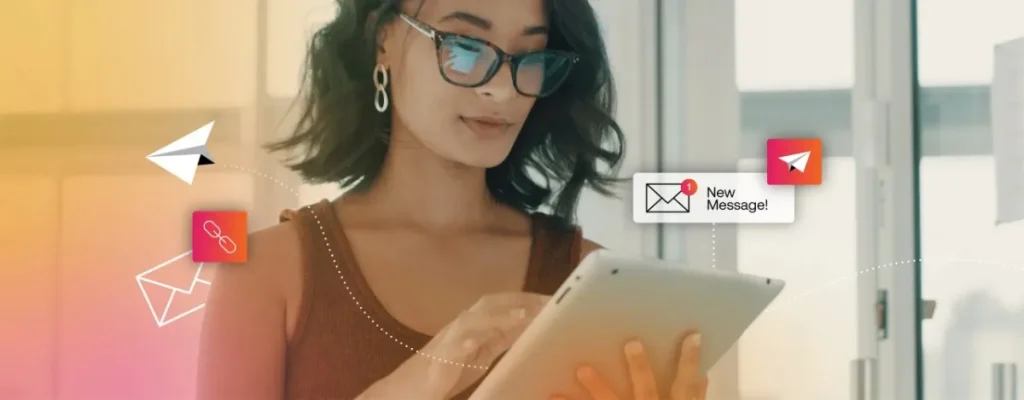
Email automation workflows for opticians use predefined triggers: a lapsed recall date, a completed lens purchase, an unanswered appointment reminder to fire the right message automatically, without manual intervention.
For eye care professionals, that means recalls, product launches, and patient education campaigns that go out reliably, without piling extra work onto the team.
This is a way to shape the patient journey. From pre-exam education to post-purchase care tips, automated emails keep practices present in patients’ lives, building loyalty and boosting revenue.
The scale of the opportunity is striking: in Q2 2025 alone, 27.9 million patients received a comprehensive eye exam in the U.S., and more than 15 million pairs of frames were sold reported The Vision Council. Each of those interactions is a chance to extend engagement beyond the exam chair.
How Email Marketing Automation for Opticians Works Day to Day
In practice, effective email marketing automation for opticians uses patient data (e.g., last exam date, product history) to trigger short, timely messages with one clear action, such as booking an appointment or checking a special frame offer. When a patient clicks to book or view the offer, the sequence stops automatically; if not, a polite reminder follows. This keeps outreach consistent without manual list-chasing.
The most effective workflows are built around four trigger types:
- Date-based: a recall is due, a contact lens cycle is ending, a birthday is approaching
- Behaviour-based: a patient clicks a frame promotion but doesn’t book
- Transactional: a new prescription is issued or a purchase is completed
- Inactivity-based: a patient hasn’t visited in 18 months or hasn’t opened the last three emails
Mapping these triggers before you build anything is what separates a true automated workflow from a batch-and-blast newsletter schedule.
Why Automate Email Marketing
Email marketing automation means setting up emails that trigger themselves based on patient activity or dates. It brings consistency and efficiency to your communications system compared with manual campaigns, which require time and risk human error. The benefits include:
- Consistent communication: Automated campaigns ensure patients receive reminders and offers on time, every time, freeing staff for in practice tasks.
- Scalability: As your patient base grows, automation scales without adding headcount.
- Personal relevance: Patient data drives segmentation and personalisation, turning generic newsletters into targeted conversations.
The return can be significant. DemandSage reports that email marketing delivers $36–$40 in revenue for every $1 spent, an ROI of around 3 600 %. Email also remains the dominant digital channel: 4.48 billion people worldwide use email, with usage projected to reach 4.85 billion by 2027. For ECPs, where clinical care and customer service run side-by-side, these economies matter.
Automation handles the repetitive work, but it can’t replace what consistent social media marketing for opticians does for building trust before someone walks through the door.
Building and Segmenting Your List
Data is the engine of effective automation. Start by building a clean database from your practice management system (PMS), website forms and in practice signups. Then segment it to ensure every message has a purpose and reflects the realities of the patient journey. Some ideas of segmentation include:
- Prescription type: single vision wearers, progressive lens patients, contact lens wearers or reading glasses users.
- Purchase history: last frame purchase date, lens coating, brand preference or service tier.
- Appointment schedule: patients due for a recall, those who recently missed appointments, or those with upcoming fittings.
Segmentation matters because relevance drives engagement. Sending a blue light lens promotion to desk-based professionals or a reminder to reorder monthly contact lenses to wearers is more effective than blasting the same offer to everyone.
Once these segments are in place, campaigns can be shaped around the touchpoints that matter most:
| Campaign Focus | Trigger | Example Use |
|---|---|---|
| Exam follow-ups | Recall date reached in PMS | Notify patients when a check-up is due |
| Contact lens continuity | Replacement cycle end date | Time emails so patients reorder before running out |
| New product launches | New collection added to inventory | Announce new frame or lens collections to style-conscious patients |
| Seasonal promotions | Calendar date | Highlight sunglasses in summer, anti-glare coatings in winter |
| Educational updates | Inactivity (60+ days since last email open) | Share newsletters on eye health and lens technology |
| Personal touches | Birthday or anniversary date | Send personalised birthday offers or trunk show invitations |
Personalisation and Tone
Automation works best when it doesn’t feel automated. Personalisation is what makes each message resonate better. Using a patient’s name in the greeting is a small detail, yet it immediately lifts engagement. Recommending products or services tied to past purchases, such as blue-light filters for heavy screen users, shows that communication is relevant rather than generic.
Even practical touches, like embedding a booking link linked directly to the practice diary, can remove friction from the patient’s next step. Campaigns that use this level of personalisation achieve an impressive 29% open rate and 41% click-through rate, far above industry averages. Tone matters too, so the messages should sound like a conversation in practice: clear, friendly, and free of jargon.
Some email automation tools also support dynamic content blocks: sections of an email that change based on the recipient’s segment, so a single campaign might be able to show contact lens reorder prompts to one group and frame upgrade offers to another, all from one send.
Measure What Matters
Success in email marketing is not guesswork. Track core KPIs in your email marketing automation for opticians strategy to see what actually drives bookings.

Open Rate
The proportion of recipients who open your email. The average open rate across all industries is around 21.33% while healthcare and medical emails typically perform slightly higher; your goal should be to exceed these benchmarks.

Click-through rate (CTR)
The percentage of recipients who click a link. Average click rates across all industries are roughly 1.4%; personalised content and clear calls to action can lift this.

Conversion rate
It's the proportion of recipients who take a desired action (booking an appointment, ordering lenses, etc.).
Unsubscribe and bounce rates
Keep these low by maintaining list hygiene and not over emailing.
Use A/B testing to optimise subject lines, send times, and content. For example, you might test whether a subject line that highlights a “limited time offer” outperforms a simple “It’s time for your eye exam” message. Test one element at a time to ensure clean, actionable insights. Over time, email marketing automation for opticians helps identify which sequences drive real bookings and which ones should be refined or retired.
Balance Benefits and Risks
Automation offers consistency, but overdoing risks alienating patients. Be mindful of:
- Frequency: sending too many emails can lead to unsubscribes; use your metrics to find a cadence that keeps patients engaged but not overwhelmed.
- Relevance: poorly segmented campaigns (for example, promoting contact lens solutions to frame only wearers) reduce trust.
- Compliance: ensure you have consent to send marketing emails and offer easy opt-out.
- Tone: avoid sounding like a bot; maintain a human voice and signoff.
Referring to our earlier article 7 Optician Marketing Mistakes That Cost You Patients, remember that generic communication and overuse of promotions are common pitfalls. Combining automation with a personal touch helps you avoid these missteps.
Before You Start: A Quick Checklist
- Set focused goals: Be specific about what you want to achieve—whether that’s increasing bookings, moving more frames, or improving patient retention—and be prepared to prioritise.
- Audit and organise your data: Cleaning patient records takes time but is essential. Start by syncing your practice management system (PMS) as the primary data source for triggers; it holds the recall dates, purchase history, and exam schedules your workflows will depend on. Ensure consent is in place, and segment carefully before you build.
- Develop templates with care: Draft emails that sound natural and reflect your practice’s voice. Test designs for readability across devices and refine them before sending.
- Plan your patient journeys: Think through the different paths (new prescriptions, ongoing care, lifestyle needs and so on) and map how email fits into each.
- Test, measure, adjust: Start small, track performance closely, and accept that optimisation is an ongoing process rather than a one-off task.
When approached methodically, automated emails can transform how you support patients across their eyecare journey. By coupling proven marketing techniques with sector-specific knowledge, you’ll deliver communication that is timely, personal, and impactful.
📣 OptiCommerce can help put these strategies into practice, automating campaigns and providing the reporting you need to see results. Book a demo today to explore how email marketing automation for opticians can strengthen patient relationships and grow your practice.