Most ophthalmology practice management systems are built for standard clinical workflows: scheduling, patient records, and billing. For routine care, that’s often enough.
Surgical practices operate differently.
Once procedures enter the picture, complexity increases at every step. Each stage depends on accurate, structured data from the previous one.
When systems fail to link these workflows, coordination is difficult to achieve. Teams rely on manual workarounds: calls, emails, and scanned documents, which slows processes, introduces risk, and limits efficiency.
At scale, this directly impacts how many patients a practice can treat and how effectively it can deliver care.
Where Disconnected Systems Actually Hurt
Before getting into what to look for in an EMR for ophthalmology, it helps to be specific about where the gaps create problems in a surgical setting, especially because they tend to be different from the friction points in a purely clinical practice.
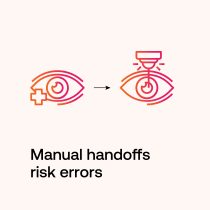
The most costly gap is usually between the clinic and the surgical list. Patient data collected during the pre-operative workup needs to reach the surgical team accurately and completely. When that handover depends on staff manually transferring information between systems or printing it and physically carrying it, the risk of something being missed or entered incorrectly is present every single time.
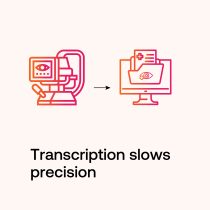
The second gap is between diagnostic equipment and the clinical record. Pre-surgical planning in ophthalmology is data-heavy: biometry, corneal topography, OCT, refraction history all feed into decisions that directly affect surgical outcomes. Staff who have to collect readings from individual machines, transcribe them, and compile them into a planning document are spending time on a task that connected software should be handling automatically, and introducing transcription risk at a stage of the process where accuracy matters most.
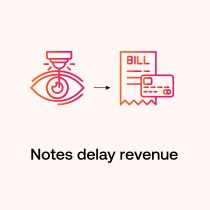
The third gap is between surgical documentation and billing in ophthalmology. Procedure-based billing requires codes that reflect what actually happened in theatre. When surgical notes are written in free text and billing codes are assigned afterwards by someone who was not present, the accuracy of that process depends on how well the notes were written under time pressure. The financial consequences, delayed claims, coding errors, and underclaiming on complex cases are ongoing and hard to quantify precisely because they are invisible until something goes wrong.
What the Software Needs to Handle
The features below reflect the workflow reality of a surgical ophthalmology practice. The question for any platform is not whether it lists these capabilities, but how deeply they are built in and how much manual work still sits between them.
The Full Pre-Operative Pathway
A surgical practice needs its software to manage the pre-operative pathway as a structured workflow. That means connecting the initial assessment to the diagnostic workup, the diagnostic data to the planning tools, and the planning tools to the surgical schedule, without manual steps in between.
Equipment integration is central to this. The diagnostic devices a surgical ophthalmology practice relies on generate data that should flow directly into the patient record. Confirm integration with your specific devices before committing to any platform with documentation that lists your exact equipment. This is worth pressing on, because the gap between what a vendor says during a sales process and what actually works with your device list can be significant.
Surgical and Clinic Scheduling in One Place
Surgical practices juggle two schedules: clinic appointments and theatre lists. When these aren’t merged in a single place, staff will spend time manually fixing them.
Unified scheduling changes everything.
Clinic visits that identify surgical candidates flow directly into theatre booking. Pre-op and post-op appointments appear alongside surgical slots. With a cloud-based EHR, even the multi-location ophthalmology practices get one real-time view across clinic and facility, which eliminates coordination overhead entirely.
Post-Operative Follow-Up as a Managed Pathway
Surgical ophthalmology has clear post-op rules: day 1 check, week 1 review, then more appointments based on the procedure type and how the patient is healing. These are required after every surgery.
Software can handle this automatically.
Good systems create the right follow-up schedule for each patient, remind staff when someone misses their appointment, and connect every review back to that patient’s original surgery details. Without this, busy practices depend on someone manually tracking everything, which means important follow-ups can get missed.
Outcome Tracking Built into the Documentation
What makes software truly surgical-ready is when it captures all your data in a structured way – pre-op measurements, what happened during surgery, and post-op results like visual acuity, complications, and IOL performance. This lets the practice see exactly how it’s performing across all cases.
That data works three ways.
Clinically, surgeons can audit their own outcomes and improve. Operationally, managers get clear numbers for performance discussions. And for working with insurers or partners, you have solid evidence to back up your results.
Free text notes can’t do this. Only structured documentation during surgery creates data you can actually analyze later.
Billing That Connects to What Happened in Theatre
Administrative work (especially prior authorizations) eats up 13 hours per week for surgical practices, per the AMA’s 2024 survey. Software that pulls procedure codes directly from structured surgical data (instead of staff reconstructing them from notes later) cuts that time and improves accuracy.
One system for all payers.
Practices mixing private patients and NHS cases shouldn’t run separate billing tools. A single system handles both payment types without creating parallel admin work that just multiplies effort.
The Compliance and Governance Layer
Surgical records have extra documentation rules beyond regular clinical notes. Implant traceability is one big one: you need to record every intraocular lens and implantable device with full details so you can track them down fast if there’s a safety recall.
Role-based access is even more critical in surgery. Theatre staff, clinic nurses, billing teams, and admins all need access to patient records, but for very different reasons. A good system lets you configure permissions that match each role exactly (theatre staff see surgical details, billing sees codes, admins see schedules) instead of giving everyone broad access that creates security gaps. This makes audits much easier when regulators or insurers come calling.
Questions to ask any vendor:
- How does implant data get captured and stored?
- What does the audit trail cover, and how far back does it go?
- How detailed are the role-based access controls, and what’s the default setup?
A Practical Starting Point
When evaluating software for a surgical ophthalmology practice, the best approach is simple: take one complete surgical case from the first clinic appointment where you spot the surgical candidate, through pre-op testing, theatre time, day 1 review, all the way to final post-op clearance, and write down every single place where your team currently has to manually transfer data, re-enter information into a different system, or chase down missing details.
Those friction points are your real cost.
Every manual handoff between systems costs time and creates risk: missed data, duplicated work, delayed billing. The true value of integrated software shows up when it eliminates those specific pain points you identified, not when it ticks random boxes from a vendor’s feature list.
Surgical practices need the full clinical baseline; scheduling, records, billing, plus the procedure-specific capabilities that general eye care software skips entirely.
Ready to see this in action? Book a demo with Acuitas 3.