PPC, or pay-per-click marketing, is a highly effective way for optometrists and opticians to reach people who are actively looking for eye care, eyewear, or optical services. Whether you want to drive bookings for eye tests, contact lens fittings, or OCT exams, or generate demand for frames, lenses, and other products, PPC puts your practice in front of high-intent customers at the right time.
Let’s learn what it is, how it differs from organic SEO and how it looks in practice.
What is Pay-Per-Click (PPC) Advertising for Your Optical Practice?
PPC is a model of digital marketing in which advertisers pay a fee each time one of their ads is clicked. First, an advert is uploaded to a platform of choice offering the PPC service. There are a number of options, including:
- Google Ads – (formally Adwords) contains Search, Display, Remarketing, Shopping & Youtube ads.
- Bing Ads – Bing offers a similar product offering to Google Ads. However they have a smaller market share and therefore a smaller audience reach.
- Facebook & Instagram – with around 2.7 billion users worldwide, Facebook is a very active place to advertise. Facebook offers display-based adverts and remarketing. They also provide an option to ‘Boost’ (amplify to other users) content you have posted organically. Instagram (around 1 billion users) is owned by Facebook and shares the same advertising management platform. Ads can be duplicated across both platforms for additional reach.
“Research from Forbes reports that global online content consumption doubled in 2020. The time has come to ensure your practice’s digital presence is found.”
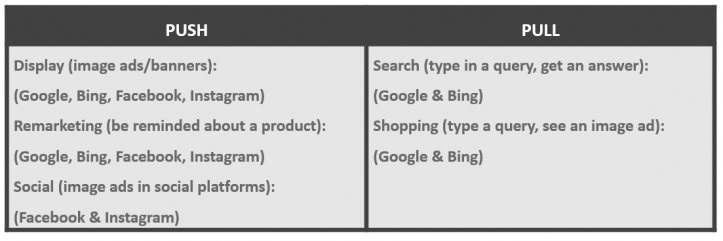
Then, as the name suggests, you are charged by the advertising platform when someone clicks on your advertisement. Adverts mostly fall into two main categories:
- PUSH
- PULL
PUSH PPC adverts use targeted topics, interests & placements to reach your target audience. A little bit like an OCT equipment manufacturer might place a print advert on Optometry Today (OT), knowing that the audience that reads OT is interested in the published topics and a well-placed advert might inform or influence a stakeholder to get in touch.
PULL PPC adverts operate based upon the consumer asking a question or “search query”. For example, entering ‘optician near me’ or ‘buy glasses online’ into the Google search bar. This will then bring back a series of both paid and non-paid results relevant to the search query.
Please note: There are other PPC variations based on views, but these tend to be used for awareness purposes mainly.
PPC vs. Organic SEO: What’s Right for Your Optometry Practice?
Organic and paid search work in a similar way. You ask a question (search query) and results based on their relevance to your query are returned. The returns for paid are based on an advertising auction, where the organic results are based on the relevance of content on your website, matching the search query.
Organic ranking takes a considerable amount of time, content and effort to rank highly on search engines. In comparison, paid search can be relatively easily and quickly achieved. Paid search results are only allowed once per website (per category). Competing against big chains with big budgets is achievable. In contrast, top organic search tends to be filled up by bigger budget players.
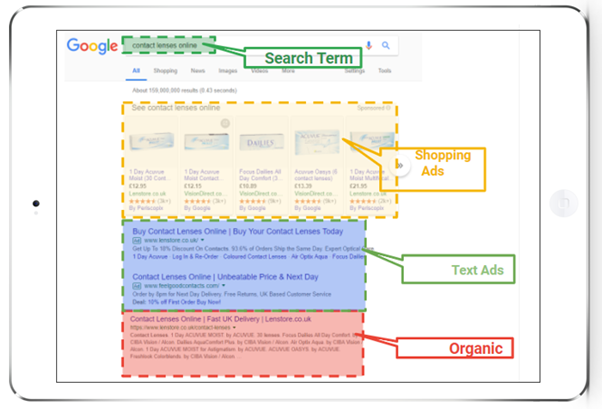
Figure 1
Paid search will always show above organic listings. On a desktop (PC/Laptop/Tablet), Google will display up to 4 adverts above any organic listings, which means that organic listings get pushed down the page. Having an organic and a paid listing showing on page one of the search is ideal. Knowing which one is actually driving appointments is where Google Analytics for eyecare comes in. It is a tool that will tell you whether your spending is working.
Combining PPC and digital marketing for opticians builds trust and increases the likelihood that customers will click through to your website.
Local SEO and PPC for Optometrists
Local PPC for eye doctors works best alongside strong organic visibility. Our guide on SEO for opticians and optometrists explains how these two combine.
See the example in figure 2. The search term used was ‘opticians eye test.’ The top three returned listings were all paid ads.
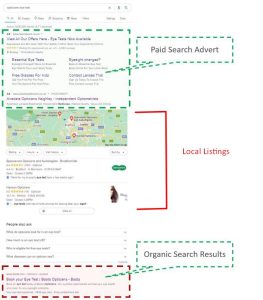
Figure 2
The nature of the ad auction means that, independents can compete for a share of the top listings with bigger chains. Because of the nature of pull adverts like Google search, they tend to drive actions such as appointment bookings consistently. Also, having the right practice management software that independent opticians rely on ensures those new bookings are handled smoothly from first appointment to follow-up.
Hence why we have focused on this element for a detailed example in figure 3 below.
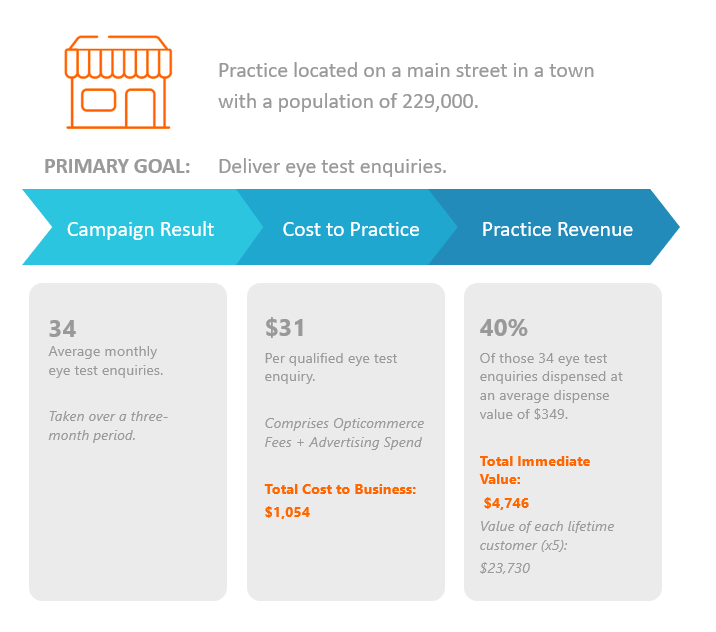
Figure 3
Should opticians use Google Ads? The case above would suggest that pull-based Google search ads are the best at driving engagement in the eyecare sector. In many cases, this is true and this is the logical place to start. But as with any type of marketing, different channels affect responses at different stages of the buying cycle.
For example, having a balanced marketing plan and an effective email marketing workflow will have a larger impact than any individual tactic or channel. Look at a 12-month view and review, and try not to think month-to-month.
In the second part of this blog, we’ll detail out the customer journey, the importance and real impact of push adverts and how remarketing can help turn “curious clickers” into a customer for life.
Conclusion
As mentioned above, PPC and organic search work well together rather than competing with each other. Paid ads can get you visibility quickly, while organic rankings take time to build and can deliver results in the long run.
Are you looking for a specialised digital marketing provider for your eyecare industry? OptiCommerce offers unique, flexible solutions to boost your local footfall, sell exclusively online, and improve your traffic.