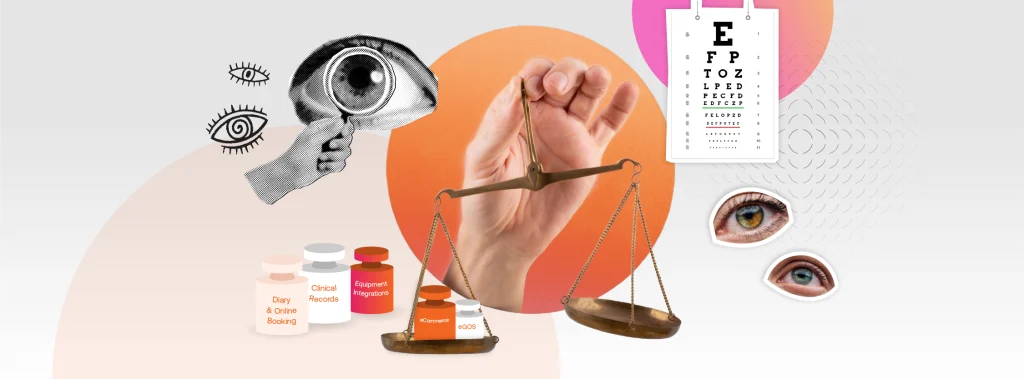
If you’re running an optical practice in the UK and are trying to find the perfect practice management software (PMS), there’s a high chance you’ll run into Acuitas 3 and Orasis. Both are purpose-built for opticians, both handle the day-to-day workflows a practice depends on, and both have been around long enough to have a real track record.
What separates them is how each platform handles the details. The depth of clinical documentation, the breadth of equipment integration, how reporting is built, what the pricing structure looks like, and what happens when a practice grows beyond a single site. Those are the areas where the comparison gets useful.
The information below is drawn from publicly available feature documentation, trade press coverage, and verified company information. For anything specific to your setup, a demo from each vendor remains the most reliable way to verify what matters to your practice.
Background on Each Platform
Orasis has been providing practice management software to independent UK opticians since 1995, developed and supported from Bromsgrove in the West Midlands. The platform runs on Windows and is built around a step-by-step workflow that guides staff through the patient journey.
It comes in two tiers: Lite, which covers the core patient relationship for practices with up to four users, and Professional, which adds clinical records, dispensing, stock, financials, and optometry practice KPI reporting with unlimited users. Orasis describes its design philosophy as one that prioritises ease of use and speed, with the goal of getting practices running on the system quickly.
Acuitas 3 is Ocuco’s flagship platform for independent practices and groups. Ocuco was founded in Dublin in 1993 and is now the largest optical retail software provider worldwide, with over 6,750 sites using its products across 88 countries.
Acuitas 3 serves independent practices, optical chains, and multi-site groups across the UK, Ireland, and the US. Its design emphasis is on connecting clinical and retail workflows: eye exams, equipment integration, dispensing, eCommerce, and omnichannel patient journeys within a single platform.
How the Platforms Compare at a Glance
The features that matter most in a practice management system tend to be the ones that touch every working day. Here is how the two platforms line up on the fundamentals.
| Feature | Acuitas 3 | Orasis |
|---|---|---|
| Diary & online booking | Yes; unified online and in-practice ¹ | Yes; online appointment booking included ² |
| Clinical records | Fully configurable by visit type ¹ | Step-by-step walkthrough; configurable defaults ² |
| Equipment integrations | Extensive catalogue ¹ | Topcon and Nidek confirmed; broader integration on request ² |
| eGOS | Yes; with GOS forms and payment reconciliation ¹ | Yes; direct Primary Care Support England (PCSE) integration ² |
| Dispensing | Validated dispensing with error reduction ¹ | Yes; full dispensing and order management ² |
| Stock management | Real-time across sites ¹ | Yes; stock-take function included ² |
| Recall & patient comms | Multi-channel automated recall ¹ | Email, SMS, letters; MS Word and Outlook integration ² |
| Reporting | Power BI integrated dashboards ¹ | Real-time KPI dashboards (Professional tier) ² |
| eCommerce | Yes; synced online and in-practice ¹ | Not listed as a core feature |
| Contact lens management | Yes ¹ | Yes; full contact lens fit and aftercare ² |
| Telephony integration | Yes ¹ | Yes ² |
| Financials & EPOS | Yes ¹ | Yes (Professional tier) ² |
¹ Acuitas 3 features: https://www.ocuco.com/industry-solutions/independents/acuitas-3/
² Orasis features: https://www.orasis.uk.com/product-overview/ and https://www.orasis.uk.com/benefits/
Note: The information in this table is compiled from publicly available sources and is accurate to the best of our knowledge at the time of writing. Feature availability may change; always verify directly with each vendor before making a decision.
Pricing and Commercial Model
One of the more immediately practical differences between the two platforms is how pricing works.
Orasis publishes its pricing directly. The Lite tier is £99 per month and covers patient records, recall, diary, prescriptions, and patient communications for up to four users, suited to smaller practices that want to manage the core patient relationship without fully computerising financials and stock.
The Professional tier is £175 per month and adds clinical records, dispensing and orders, stock management, financials and EPOS, KPIs, and contact lens management with unlimited users. Discounts apply for second and subsequent practices.
Acuitas 3 is structured around the size and complexity of the practice: location count, user numbers, and modules required all factor in. Practices considering Acuitas 3 should request a quote specific to their setup.
eGOS and NHS Workflow
Both platforms handle eGOS, and both have done so long enough to be credible choices for NHS-volume practices. Orasis integrates directly with PCSE and describes its eGOS interface as built for speed: no waiting for browser interfaces to refresh, with submissions handled directly from within the system. Acuitas 3 handles eGOS within its broader NHS voucher management, covering GOS forms and payment reconciliation as part of the integrated workflow.
For practices where NHS volume is significant, the question to bring to a demo is less whether eGOS is supported and more how each platform handles errors, rejections, and the connection between the eGOS workflow and the wider patient record.
Clinical Records and Equipment Integration
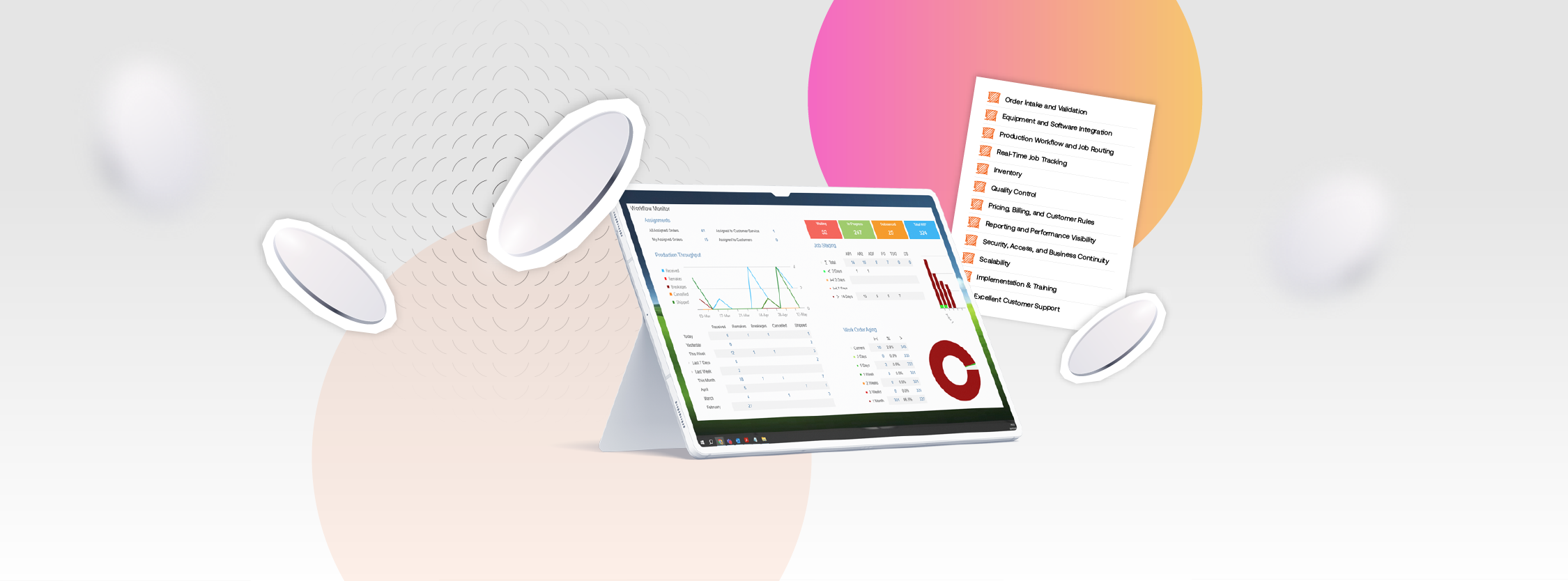
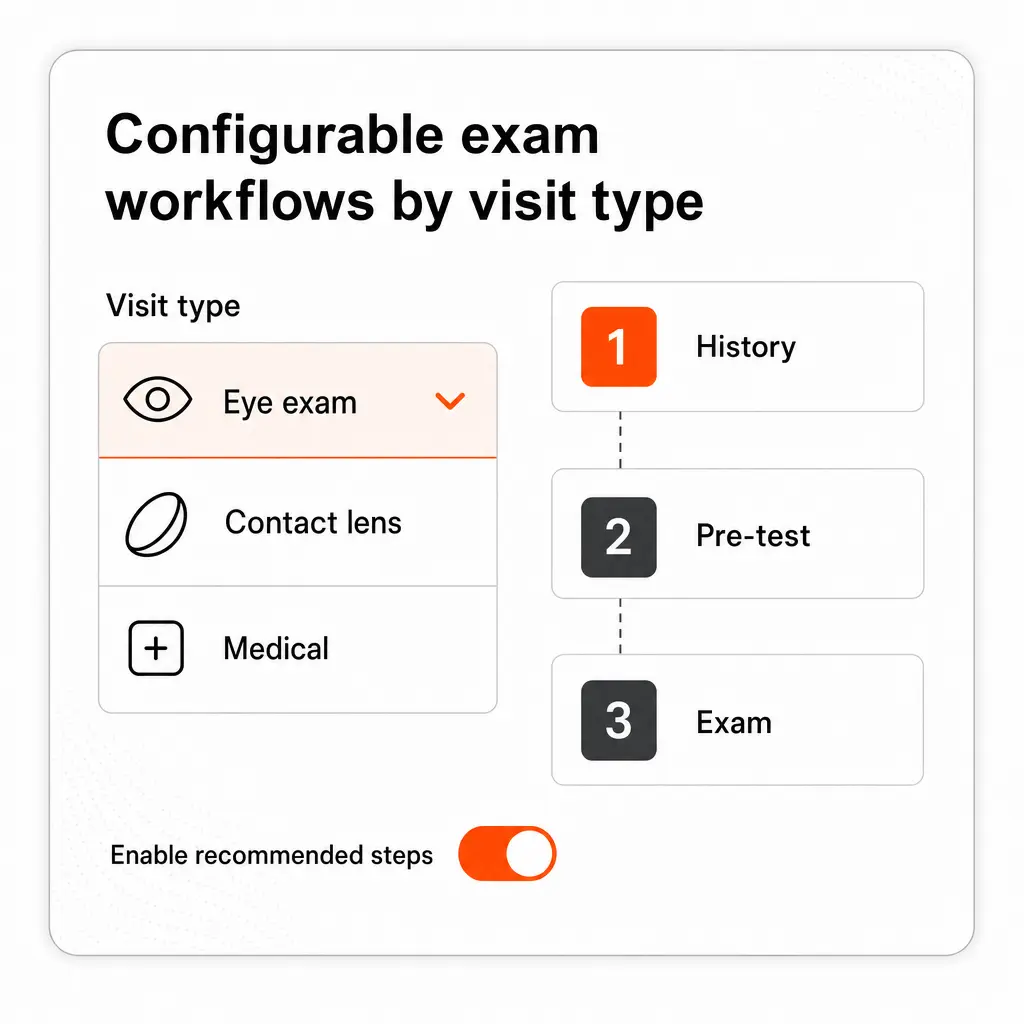
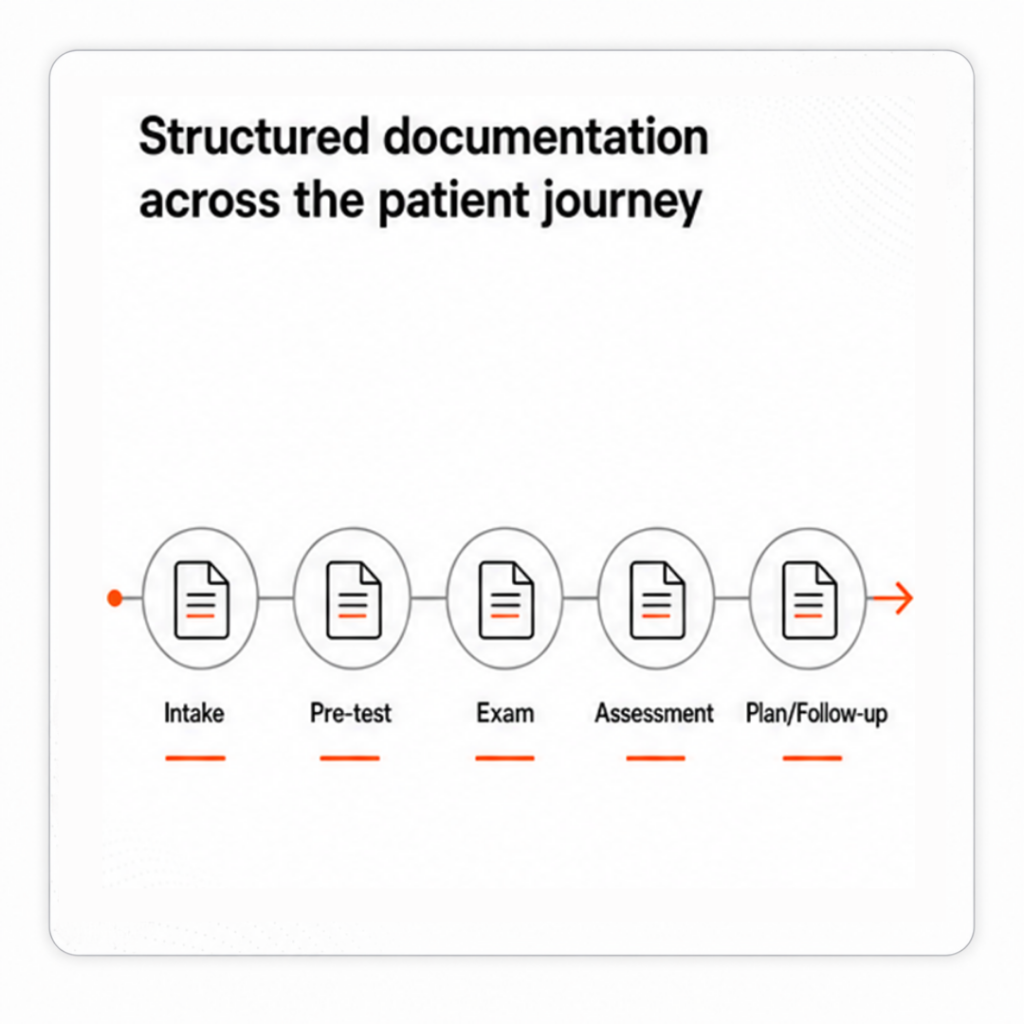
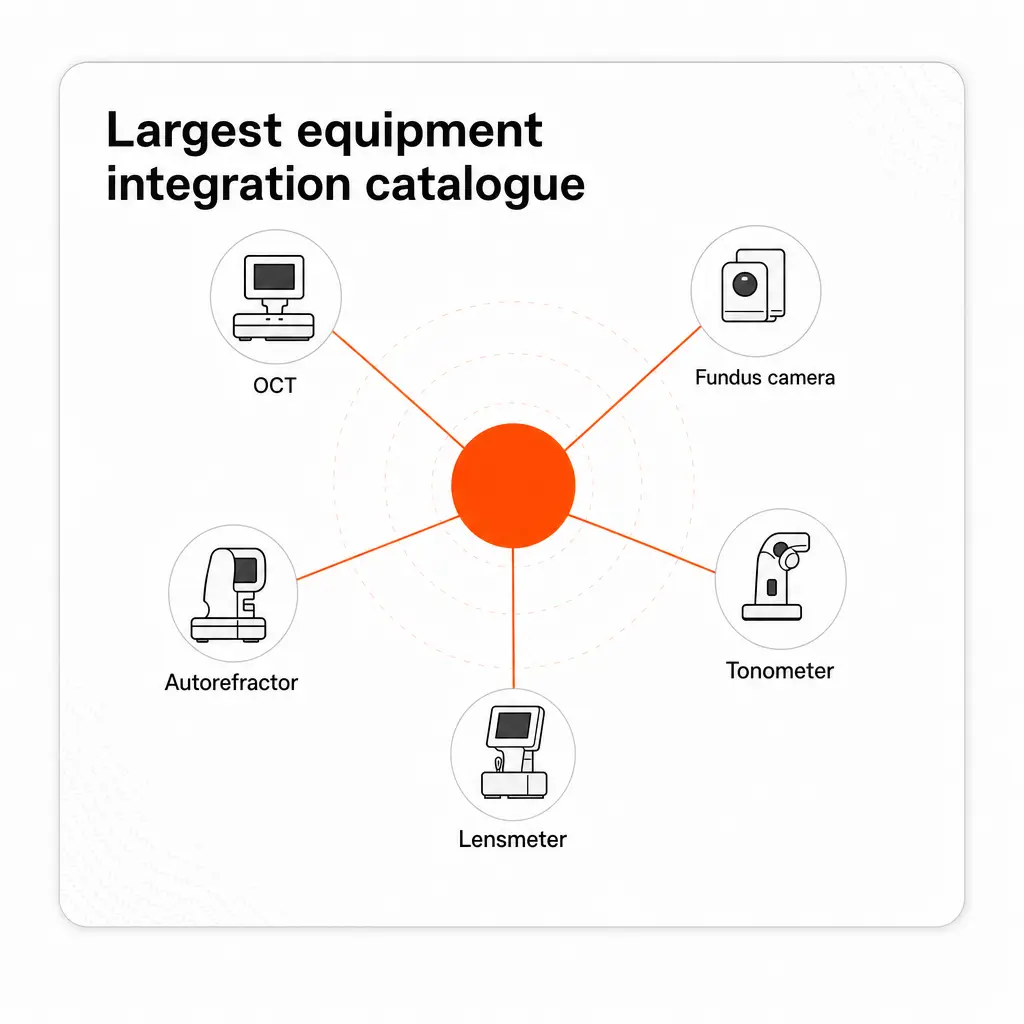
Acuitas 3 centres its design on the clinical encounter. Exam workflows are configurable by visit type, documentation is structured across every stage of the patient journey, and the equipment integration catalogue is the largest in the industry.
Orasis handles clinical documentation through a guided, step-by-step workflow with configurable defaults and adjustable input order. Images from diagnostic equipment are stored directly in the patient record and accessible from any workstation. Confirmed integrations include Topcon and Nidek; other devices can be integrated on request.
The real difference is how far each catalogue goes. Willingness to integrate and a published, tested device list are not the same thing. Any practice with specific diagnostic equipment should ask both vendors to confirm support for their exact devices before signing anything.
Dispensing and Stock Management
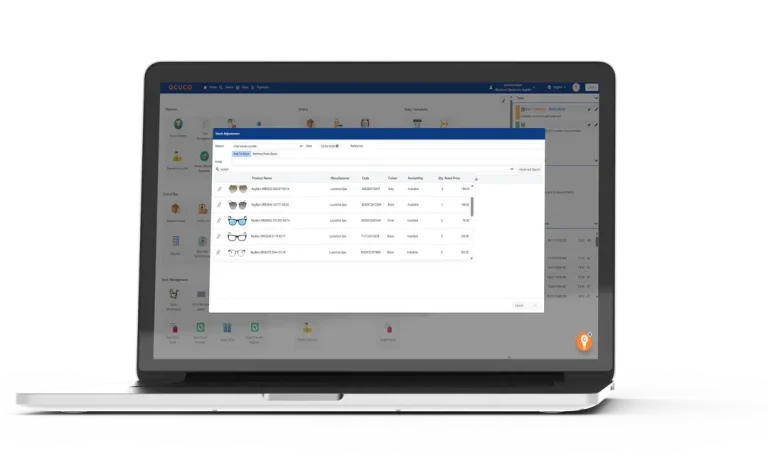
Acuitas 3 includes a validated dispensing layer: a real-time check that confirms whether a specific frame and lens combination can be made before the order is placed, which reduces remakes significantly. For practices where dispensing errors are a recurring concern, this is worth testing in a demo with real scenarios from your practice.
Orasis handles dispensing and stock as part of the Professional tier. The dispensing module covers the full workflow: professional services, frames, lenses, contact lenses, and other product lines, with full integration into the financials module to reduce duplication. The stock-take function speeds up optical inventory counts and maintains accurate stock valuations.
Reporting
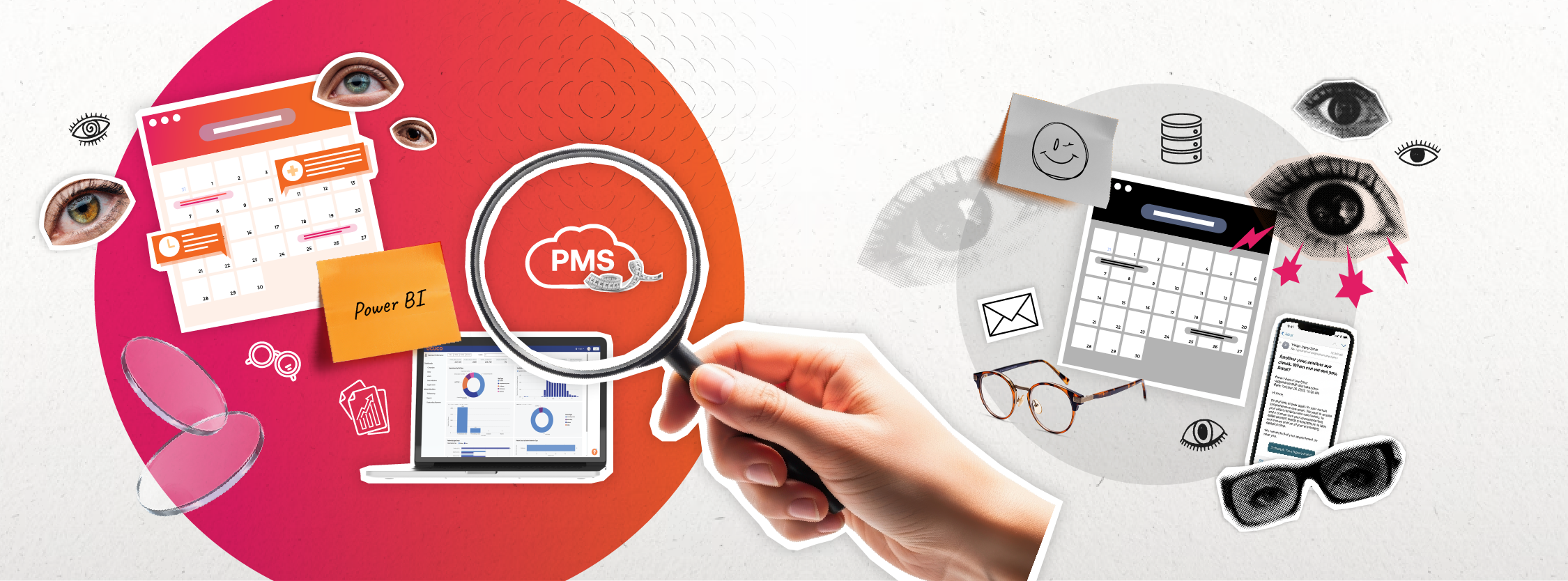
Acuitas 3 integrates Power BI, which gives practices access to multi-site dashboards with drill-down capability by site, clinician, and time period. For practices with their own data teams, the Power BI layer also means custom reports can be built against the same underlying data.
Orasis provides real-time KPI reports built directly into the Professional tier. These cover the performance metrics that matter most in a single-site or smaller multi-site context without requiring a separate reporting tool. For practices that want clear, built-in KPI visibility without additional tooling or setup, the Orasis approach is practical and accessible from day one.
Multi-Site Operations
Both platforms support more than one location, but the architecture behind that support is different.
Acuitas 3’s multi-site design is built around centralised reporting, shared clinical standards, and an omnichannel patient overview that connects online and in-practice touchpoints across locations. This reflects its use in larger optical chains and groups operating at scale across the UK, Ireland, and the US.
Orasis supports multi-practice deployments and offers discounts from the second site onward. Training is available on-site, online, or at its Midlands office, and support runs by telephone and online, which works well for independent practices and smaller groups that do not have dedicated IT staff.
Compliance, Scale, and Commercial Overview
| Feature | Acuitas 3 | Orasis |
|---|---|---|
| ISO 27001 | Yes ³ | Not listed as a core feature |
| SOC 2 Type II | Yes ⁴ | Not listed as a core feature |
| Deployment | Cloud ¹ | Cloud or local storage ² |
| Multi-site | Yes; centralised reporting and control ¹ | Yes; multi-practice with discounts ² |
| API access | Yes ¹ | Not listed as a core feature |
| US market support | Yes ¹ | No |
| Pricing | Quote-based by practice size ¹ | £99/month (Lite), £175/month (Professional) ² |
¹ Acuitas 3 features: https://www.ocuco.com/industry-solutions/independents/acuitas-3/
² Orasis pricing and features: https://www.orasis.uk.com/pricing/ and https://www.orasis.uk.com/product-overview/
³ Ocuco ISO 27001: https://www.ocuco.com/news/ocuco-receives-iso-270012017-certification-for-information-security-compliance/
⁴ Ocuco SOC 2 Type II: https://www.ocuco.com/news/ocuco-awarded-soc-2-type-ii-certification-for-acuitas-3-omnichannel-edition/
Note: The information in this table is compiled from publicly available sources and is accurate to the best of our knowledge at the time of writing. Feature availability may change; always verify directly with each vendor before making a decision.
Security and Compliance
Acuitas 3 is backed by ISO 27001-certified practices and SOC 2 Type II certification, alongside GDPR and DPA compliance and a full audit trail. For practices operating in regulated environments or as part of larger groups with formal governance requirements, that certification layer matters.
Orasis does not list equivalent certifications on its public pages. It uses Microsoft SQL Server as its database engine and supports both an optometry EHR system that’s cloud-based and with local data storage, giving practices the option to keep data on-site. Practices with specific data governance or compliance requirements should confirm Orasis’s current position directly with the vendor.
Which Practice Each Platform Suits
Orasis suits independent practices and smaller groups that want transparent, published pricing and a fast setup. The tiered model keeps costs predictable, and the option to store data locally works well for practices with specific preferences around where their data sits.
Acuitas 3 suits practices that need clinical depth, broad equipment integration, validated dispensing, and reporting that scales across sites. The SOC 2 Type II certification and full audit trail make it the stronger option for practices with formal compliance requirements, and its architecture holds up as practices grow. It is also well suited to independent single-site practices that want omnichannel capability and clinical depth built in from the start.
Taking the Next Step with Acuitas 3
For practices building a software foundation with growth in mind (or outgrowing what their current system can handle), Acuitas 3 connects clinical records, practice management, dispensing, eCommerce, and reporting in a single platform without requiring additional tools as the practice expands.
The equipment integration depth, the validated dispensing layer, and the Power BI reporting architecture are features that tend to matter more as volume and complexity increase.
For independent optical practices and eyecare chains evaluating their options, a demo is the most direct way to see how Acuitas 3 handles the workflows specific to your practice. Book a demo with Acuitas 3.