Patients want their eyecare to be straightforward, from booking an appointment to choosing and buying eyewear. They expect helpful service and care that fits their needs, whether they contact a practice online or visit in person. When staff rely on separate systems and manual tasks, it can be harder to keep each step running smoothly. Connected technology can help teams spend less time on admin and provide a smooth experience for patients.
I spent more than 20 years working as a dispensing optician before becoming a professional services consultant at Ocuco. During that time, I’ve seen patient expectations change as technology has become a bigger part of everyday life. People now expect the same ease and convenience from their optical practice that they find in other services.
In my experience, making everyday tasks easier for staff also makes a difference to patients. When teams can find the information they need and keep appointments, records and orders connected, they have more time to focus on the person in front of them. That can leave patients with a positive impression of the practice and give them a reason to return.
Enhancing Eyecare Patient Experience with Online Booking
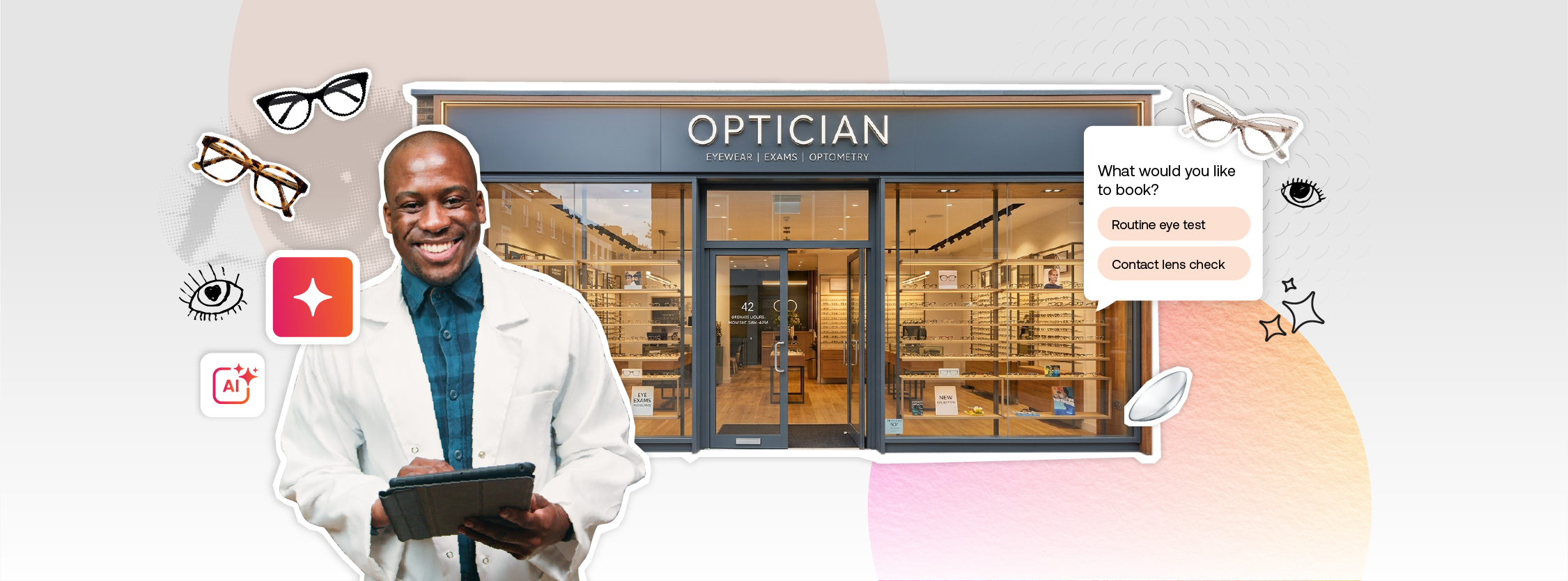
Booking an eye exam online is often the first touchpoint of the eyecare journey and can set the tone for the entire experience.
Every step from check-in to payment is part of optical practice management, and the smoother each handoff, the better the experience for both staff and patients.
When I began my career as a dispensing optician, every appointment was booked over the phone or in person and manually added to the practice diary.
If a patient required any changes to their appointment or needed to cancel, they had to phone the practice, often resulting in staff time being taken up handling last-minute adjustments and unfilled appointment slots. However, now integrated online booking systems allow patients to book appointments 24/7, view available time slots, and even reschedule or cancel appointments without the need for direct staff involvement.
At Ocuco we’ve seen practices that have implemented Acuitas 3’s integrated diary, increase their appointment bookings by up to 30% while also benefiting from noticeable reductions in no-shows, all with minimal staff intervention. Staff members are freed up to focus on more critical tasks, leading to a more streamlined and efficient operation overall to the benefit of both staff and patients.
The benefits of an integrated booking approach go beyond the booking process itself. It allows patients to input preliminary details, upload insurance information, and specify any concerns or special requests before stepping into your practice. Smooth patient flow from check-in to checkout usually comes down to how well your optical retail software connects each step of the process.
This proactive approach not only saves time but also equips the practice with relevant information to tailor the consultation, ensuring a more personalised and effective eyecare experience. Not to mention the financial impact of poor scheduling, which makes it harder to predict demand, manage staffing effectively, and stock the inventory.
Getting patient flow right is easier when your processes were mapped out early, ideally as part of a broader business planning process for optometry practices.
Real-Time Patient Data and Seamless Clinical Optometry Workflows
When a patient arrives, an integrated practice management software streamlines patient flow by centralising key information, so everything from medical history to appointment details and preferences is easily accessible. This enables seamless transitions throughout the visit.
During the eye exam, an integrated workflow eliminates delays from manual processes and missing data. Optometrists can quickly retrieve updated records, review previous consultations, and prescribe with precision ensuring continuity throughout the eye exam. There is no longer a need for handwritten handover notes and briefings as it is all accessible within the patient’s record within a few clicks.
This accessibility of data within the practice is a game-changer for the likes of dispensing opticians who no longer need to rely on in-depth post-eye exam briefings from optometrists, knowing that all the information is recorded if a handover cannot take place or the dispense is completed at a later date.
Dispensing and Payment Processing for Optometrists
After the eye exam, the next step in the digital patient journey is eyewear selection and payment. The ability to track inventory in real-time ensures the selected eyewear is available and in stock, with automatic reordering helping to maintain optimum stock levels especially for core ranges.
This was a benefit I saw firsthand as an Acuitas 2 user when I worked in practice, as the optical inventory management software ensured patients had a wide variety of frames to choose from. As a dispensing optician this also enabled me to spend more time with patients and less time focusing on the admin side of stock management.
Acuitas 3 now takes this even further, offering advanced features for automated product reordering and inventory management. It’s even possible to see what frames patients have browsed online pre-appointment so that you can have them ready for them to try on and fit post-eye exam for a truly integrated experience. The optical inventory software ensures stock levels are consistently maintained, minimizing the risk of both shortages and overstocking.
From a patient perspective, this means the products they want are always available. For the practice, it eliminates discrepancies in stock levels, as well as the need for manual inventory management and reordering. From a revenue standpoint, it helps maintain optimal stock levels by ensuring you only carry frames and products from popular, high-demand ranges. This is functionality that has been particularly beneficial to multi-location users of Acuitas 3 looking to centralise stock management throughout several practices.
The payment experience should be equally seamless in order to maintain a streamlined patient flow. Once the patient has selected their eyewear, an integrated system automatically processes payments and insurance claims, reducing administrative work and accelerating cash flow. Integrated payment solutions like OcuPay integrate directly with Acuitas 3, eliminating errors and the need for manual entry, as your credit card terminal and point-of-sale system are aligned, removing the need for manual end of day-reconciling, a task that nobody looks forward to when working in-practice.

The Benefits of an Integrated Approach for Opticians
An integrated experience that combines online booking, patient records, clinical workflows, and payment processing for optometrists offers numerous benefits for both patients and practices:
1. Improved Patient Satisfaction
By offering online booking, seamless check-ins, and cloud-based eyecare services for easy access from any device, anytime, anywhere, you provide a better experience that meets patients’ needs. This not only leads to higher patient satisfaction but also builds loyalty, making it more likely that they will return for future visits and recommend your optical practice to others.
2. Increased Efficiency and Reduced Errors
With an integrated web based optometry software, data is automatically updated across all touchpoints. This reduces the chances of errors that typically arise when patient information has to be manually entered or transferred between different systems. By automating routine tasks such as appointment scheduling, patient record updates, and payment processing, practices can operate more efficiently and focus on providing quality care.
3. Cost Savings
Reducing manual data entry, administrative overhead, and no-show rates leads to cost savings for the practice. An integrated digital patient journey also improves inventory management, allowing practices to reduce stockouts or overstocking, which helps lower costs.
4. Streamlined Workflow for Staff
From booking appointments to dispensing eyewear and processing payments, everything is connected, reducing the need for staff to juggle multiple systems. This boosts productivity, reduces stress, and ensures smoother day-to-day operations.
5. Faster Payment Processing
With integrated billing software for optical practices, practices can speed up the payment process, reduce billing errors, and enhance cash flow. Patients can pay securely online or in person and staff can quickly generate accurate invoices without needing to manually input payment data.
Conclusion: Inclusive Patient Eyecare Care Through Technology
From booking an appointment online to recording examination results and keeping stock up to date, connected systems can make everyday work easier. Staff can spend less time moving information between systems or checking details by hand. Patients benefit too, with fewer delays and a more straightforward experience as they move from their appointment to choosing and ordering eyewear.
During my years as a dispensing optician and, more recently, as a professional services consultant, I’ve seen how these changes can help in practice. Having the right information available when it is needed helps teams organise their work and answer patient questions. It also gives staff more time to listen, explain the options and provide the care that encourages patients to return.
The starting point is to look at where your team spends time on repeated tasks and where patients encounter delays. Connecting those parts of the process can help your practice run more smoothly and make each visit easier for patients and staff.
Book a demo to see how Acuitas 3 can support your team’s day-to-day work, from managing appointments and clinical records to dispensing and stock management.