
Today’s eyecare patients don’t choose an optician based on location alone. They search online, compare services, read reviews, and judge convenience long before they step through your door. If your practice isn’t visible and compelling across these digital touchpoints, you’re losing patients to competitors who are.
That’s why a strong marketing strategy for optical shop businesses is no longer optional. From ranking on Google and Bing to engaging patients on social media and sending timely reminders via email or SMS, your online presence shapes first impressions and drives bookings.
Continue reading to learn how to create an online presence that consistently brings new patients through your doors.
Why a Marketing Strategy Is Essential for Modern Opticians
Optician marketing is the deliberate promotion of your practice across channels such as search engines, your website, social media, email, and online reviews, helping patients find and choose you rather than relying on walk‑ins or referrals alone. It matters because today’s customers research, compare and decide long before they step through your door. Without a structured approach, your visibility, differentiation and patient engagement suffer, especially as online competition grows.
Independent opticians face particular challenges: limited time, evolving digital behaviour and competition not just from local rivals but major online and high-street eyewear retailers. A clear marketing strategy helps attract the right patients, improve your online presence and track performance so decisions are based on data, not guesswork.
Core Marketing Strategies for Optical Shops
Here are the top digital marketing strategies that optical shops are leveraging to drive business online:
1. Your Local SEO Advantage
For any eyecare business, local SEO is one of the most effective digital marketing strategies you can take advantage of. Your Google Business Profile (GBP) plays a huge part in how your practice appears in local search results.
A very common term customers might search for could be “opticians near me” or “eye test in [your area]”, and your GBP is going to help Google determine whether you’re featured in the Google Map Pack. This means having your GBP optimised in a variety of ways, such as up-to-date opening hours, but also listing your services and posting recent photos of your store. All of these actions send a clear signal to Google that your business is worth showcasing, and this helps us boost your online visibility to customers.
According to LoopEx, when customers see a business with a complete Google Business Profile, they are:
- 2.7 times more likely to trust you
- 70% more likely to visit your website
- 50% more likely to make a purchase
Online reviews can really impact someone’s decision before even engaging with a business, because we trust public opinion and other people’s lived experiences. Practices with more positive reviews rank higher in Google and receive a higher volume of enquiries as a result. The combination of a strong GBP, positive reviews, and a well-placed map listing can dramatically increase footfall and bookings.
Another factor that can boost your local SEO is making sure your practice’s details are listed consistently across different online directories. Local citations such as NHS directories, Yelp, Yell, and other healthcare-specific platforms help reinforce your practice’s credibility. The result is that you appear more trustworthy, which helps Google validate your business as legitimate.
Inconsistencies with details like practice name, address, or phone number can damage your local SEO performance, so keeping these up to date is important if you want to build trust with your patients and search engines.
2. Running Smart Paid Campaigns
Advertising eyecare through Google Ads allows optical shops to appear instantly for high-intent search queries. When someone searches for terms like “eye test in [city]” or “children’s glasses near me,” ads can place a practice prominently in search results. Campaigns can be targeted by location, device type, age group, and time of day, allowing budgets to be used strategically to reach the most relevant audience.
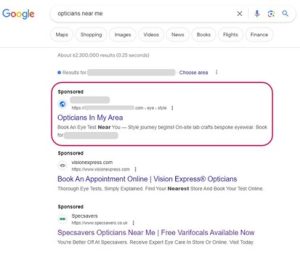
Most of us are on social media, but not everyone understands just how powerful a tool it can be for business. Social media platforms such as Facebook and Instagram (which are now under Meta) offer eyecare practices the chance to build awareness and promote their brand.
Having a paid Meta Ads strategy places your practice directly in front of targeted audiences by using visually striking content. This is perfect for showcasing your latest range of frames, sharing practice updates, or running promotional events. Retargeting ads is an additional step you can implement to re-engage customers who have already visited your optician ecommerce website but didn’t convert, bringing them back when they’re ready to book an appointment or purchase eyewear.
Display ads help highlight seasonal offers, unique independent services, or premium range of frames and eyewear. Advertise success-proven promotions like 2-for-1 glasses or discounts on contact lenses. Google Shopping ads are a fantastic way to showcase specific products with images and prices directly in the search results too.

3. A Website That Works Harder for Your Practice
Optical practices also need optimized websites. If a site doesn’t load or display properly on mobile, visitors are likely to leave and choose another provider. A mobile-friendly optical website should have fast loading speeds, intuitive navigation, and a layout that adapts smoothly to smaller screens.
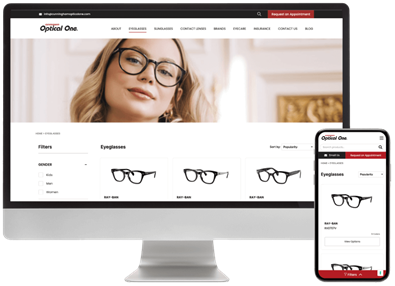
Your optometry web design should make it easy for your customers to take the next step. Whether they’re booking an appointment or enquiring about a product or service you offer, these calls to action should be prominent and clear to the eye. An online booking system for opticians and clear contact forms are crucial when designing your eyecare website to encourage immediate actions or conversions.
As we’ve already established, your website acts as the virtual window to your physical store. Your site should reflect the professionalism and level of care that your practice offers. By incorporating accessibility features like readable fonts, high-contrast colours, and compatibility with screen readers, you can ensure that all of your customers can navigate your site with ease and comfort.
4. Social Media That Builds Loyalty and Trust
Social media can act as a tool in digital marketing for optometrists, but it also allows your business to build a community. If you’re posting regular content that’s relevant to your customers, they are far more likely to engage with your business. Some content ideas we often encourage are behind-the-scenes stories at your practice, educational eyecare trips, new launches in your range of frames, or even promotional offers.
Emma Porter, Senior Marketing Executive at OptiCommerce, shared some insights on social media content she has created for one of our clients:
“For independent practices, personalised content is always going to perform the best. People like real-life, real-person interactions, especially from a health care provider.
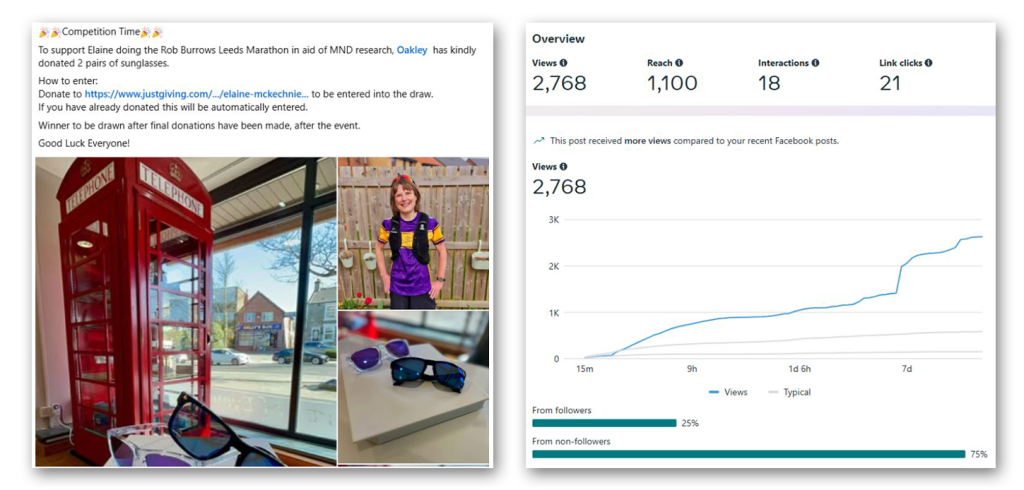
Content like practice updates, competitions, charity events and showcasing new eyewear performs incredibly well, and is well received by the local community. Here we can see that a competition post with a fundraising link received 2,768 views, reached 1,100 accounts with 18 interactions and 21 link clicks. “
We can see that social media isn’t always inherently about online marketing for opticians, but it does support the customer journey by establishing a sense of trust between you and your customer.
It’s important you vary the type of content you are posting, though. When it comes to Facebook and Instagram, for example, you should be posting stories, photo collections, graphics and video reels to keep things fresh.
5. Email Marketing for Patient Retention
Email marketing is still one of the most effective tools for reaching your patients and encouraging repeat visits. For an eyecare business, this means sending timely reminder emails to your patients to let them know when their next eye test is due. It also allows you to promote offers and services to existing customers who may have not known otherwise.
When creating strong-performing email communications, there are a few things to consider. The open rate is influenced by the subject line, so this lets you know if it caught their attention without having clicked into it. The content of the email itself – is it worth their time? Is the update you’re sending relevant to your audience?
It’s also important to look at the click-through-rate, which tells you how valuable the content was to your customers and if any particular call-to-action was more effective than another. We have seen particular success with some clients running email campaigns around holiday promotions, such as Christmas or Black Friday flash sales.
6. Patient Communication & Automation
Convenience is a huge part of the modern customer journey. Having an automated booking system integrated into your website allows patients to schedule appointments online, choosing slots based on real-time availability, which means it suits both you and them.
This optical-specific website feature reduces the level of admin put on staff trying to coordinate calendar availability, and provides seamless flexibility for patients. Combining this with SMS or email appointment reminders ensures you reduce the likelihood of no-shows, which maximises appointment efficiency in practice.
Customer Relationship Management (CRM) platforms, such as Salesforce or Hubspot, help accurately track and manage every patient touchpoint, from initial booking enquiries to ongoing aftercare and follow-up appointments. Having the customer journey mapped out in a CRM workflow ensures that every stage, from booking to consultation, follow-up and recall, is handled consistently and professionally.
7. Your Optical eCommerce Opportunity
The average customer has grown more comfortable shopping online nowadays, and that includes eyewear. Giving patients an online catalogue lets them browse frames, lenses, and accessories whenever it suits them, not just during opening hours.
You don’t need a full online checkout to make this work. Even a simple “browse online, reserve in store” setup helps you stand out from competitors who still rely entirely on in-store browsing. Having your products visible online keeps your practice front of mind and makes it easier for patients to choose you before they even walk through the door.
Adding tools like virtual try-on or frame previews makes the experience even better. Patients can see how styles might look on their face in advance, which builds confidence and makes in-store visits more focused and enjoyable. For returning patients, the option to reorder contact lenses or accessories online adds convenience and invites repeat purchases.
Online optical retail doesn’t replace the in-store experience; it supports it. Letting patients save favourites online and try them in person creates a smoother journey from browsing to booking, while opening up an extra revenue stream alongside your physical practice.
Measuring Success: Tracking Performance & ROI
A solid marketing strategy for opticians only works if you can actually see what’s working. That means tracking the basics: website visits, enquiries, appointment bookings, ad spend, and conversions. When the data is clear and easy to understand, it’s much easier to see where your budget is going and what’s delivering real results.
Knowing where your patients are coming from is just as important. Did they find you through Google after searching for an optician nearby? Click on a Facebook or Instagram ad? Or return because of a recall email? Proper tracking makes this visible, so you can double down on the channels that bring in booked appointments, not just clicks.
Cost per appointment is the number that really matters. Once you understand how much it costs to get someone through the door, you can set smarter budgets, adjust campaigns, and spend with confidence. Over time, small tweaks based on real data help you get more value from every pound you invest.
Why OptiCommerce?
As a recognized Google Partner, we employ advanced digital strategies to help optical businesses thrive online. Our team has a background in eyecare, providing a deep understanding of patient care and industry-specific challenges.
Whether you’re an optometrist who wants to increase bookings or an optician looking to sell frames online, we offer a range of services catering to eCommerce and digital marketing for opticians to help you achieve your goals and boost your revenue online:
- Empower your eyecare business with a custom-built site to meet the needs of your eyecare business.
- Showcase your offerings with an online storefront. Enable patients to learn about what services you offer.
- Allow customers to browse your full range of frames and book appointments anytime, anywhere.
Ready to grow your eyecare business? Book a free optician marketing consultation or request a demo today.